

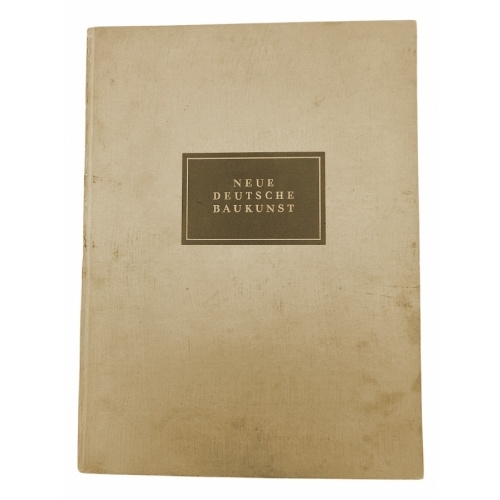
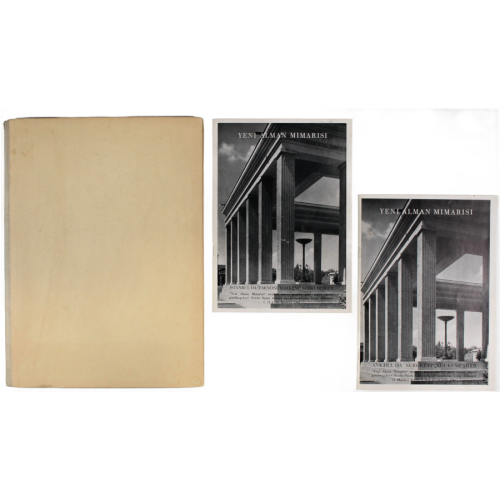
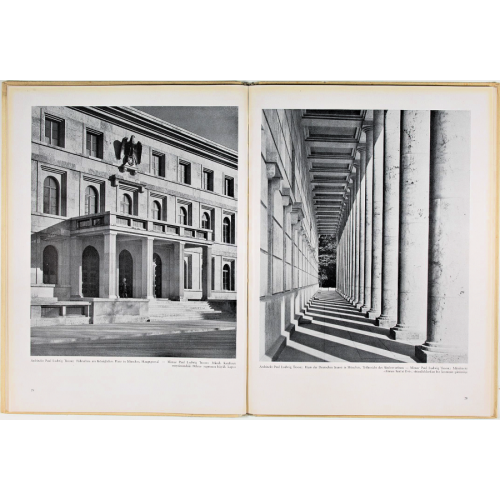
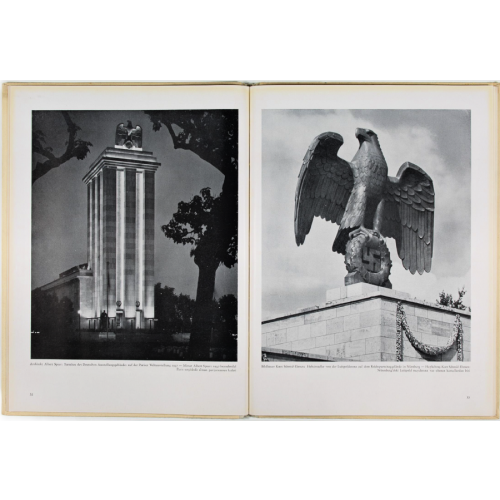
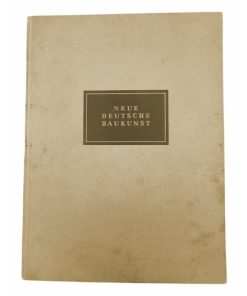
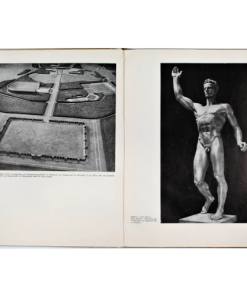
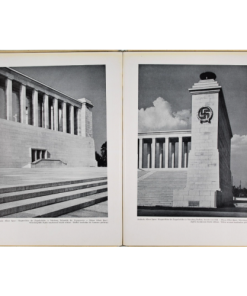
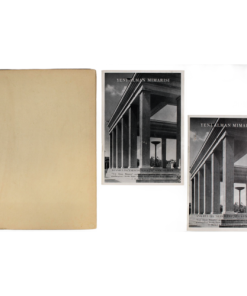
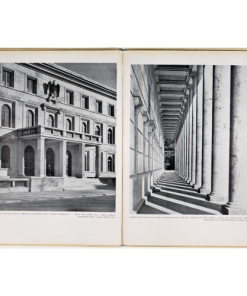
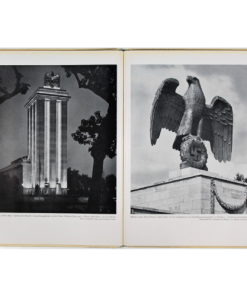

Neue Deutsche Baukunst By Albert Speer, Published by Bucherring Volk UND Reich Prag in Berlin 1941 (Original)
SKU: NEUE DEUTSCHE BAUKUNST, ALBERT SPEER 1941 BOOK
Original/Reproduction: Original
Availability: In-stock
Author: Abert Speer
Editor: Rudolf Wolters
Publisher: Bucherring Volk UND Reich Prag in Berlin 1941
Language: German
Hardcover: 95 pages
Dimensions: 8-3/4 x 9-3/4 inch
Condition: Excellent
Seller Type: WW2C
Seller ID: JMW
Return Policy: 3-day inspection and return policy on used guns and accessories.
Original, Neue Deutsche Baukunst Book, Authored by Albert Speer, Published by Bucherring Volk UND Reich Prag in Berlin 1941.
This Rare book is in Excellent condition and features 95 Pages.
Albert Speer was a prominent architect and close associate of Adolf Hitler during the Nazi regime in Germany. He served as Hitler’s chief architect and later as Minister of Armaments and War Production. Speer played a significant role in designing and constructing several monumental Nazi buildings and structures, including the Reich Chancellery in Berlin and the planned Volkshalle (People’s Hall) that was never built.
“Neue Deutsche Baukunst” (New German Architecture) is a term associated with the architectural and urban planning ideas promoted by Albert Speer, who was Adolf Hitler’s chief architect and later the Minister of Armaments and War Production during Nazi Germany. Speer played a significant role in shaping the architectural and urban planning vision of the Third Reich.
Speer’s architectural ideas were closely aligned with the Nazi regime’s aspirations for a monumental and grandiose architectural style that would reflect the power and dominance of the Nazi state. Some key elements of “Neue Deutsche Baukunst” included:
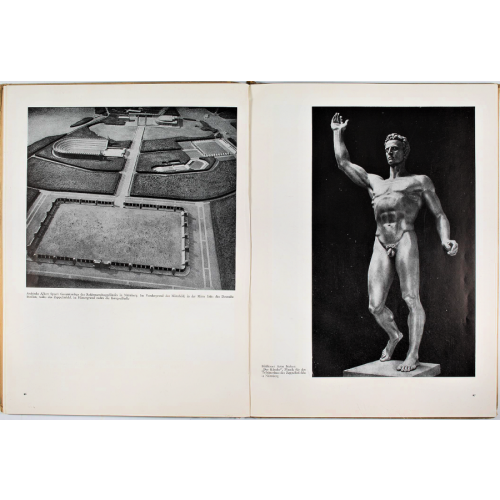
- Monumentalism: Speer favored large, imposing, and monumental architectural designs. He believed in the use of massive structures to convey a sense of strength and authority. His plans for the redesign of Berlin, known as the “Welthauptstadt Germania” (World Capital Germania), were a prime example of this approach, with vast boulevards, monumental buildings, and grand public spaces.
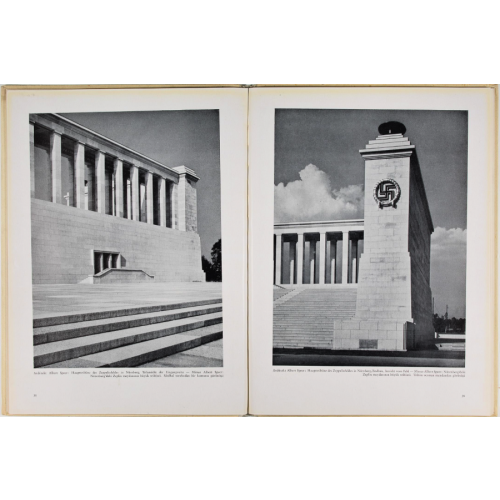
- Classical Influences: Speer drew inspiration from classical architecture, particularly the architecture of ancient Rome. He incorporated classical elements such as columns, arches, and symmetry into his designs.
- Simplified Forms: While Speer’s designs often featured grandeur, they also exhibited a certain degree of simplicity and minimalism, focusing on clean lines and stark geometric shapes.
- Nazi Ideology: Speer’s architectural vision was closely tied to Nazi ideology, as it aimed to celebrate the Nazi state and its leaders through architecture. His projects were meant to convey a sense of unity, order, and control under Nazi rule.
Be the first to review “Neue Deutsche Baukunst By Albert Speer, Published by Bucherring Volk UND Reich Prag in Berlin 1941 (Original)”
You must be logged in to post a review.
Related products
WW2 Collectibles
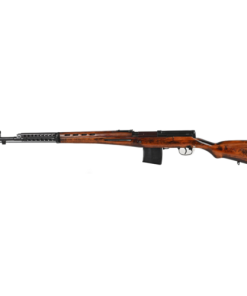
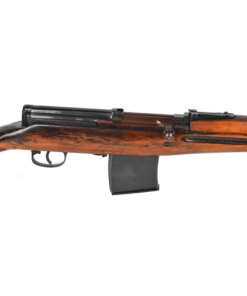
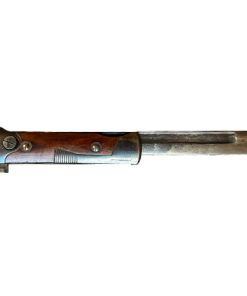
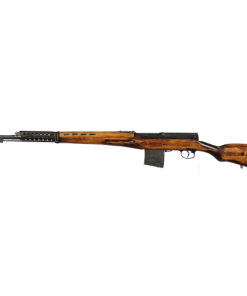
WW2 1940 Soviet Russian Izhevsk SVT-40 Semi Auto Rifle (Original)
WW2 Collectibles
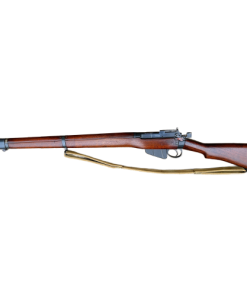
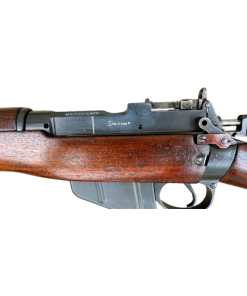
WW2 British Savage Enfield No.4 MK1 Caliber .303 *Marked “U.S. Property Rifle (Original)
WW2 Collectibles
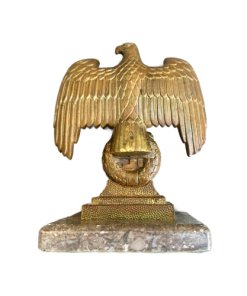
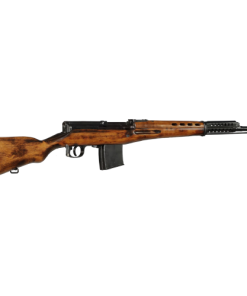
WW2 Soviet Russian SVT40 Tokarev 1943 Tula Aresenal Cal 7.62X54r Semi Auto Rifle (Original)
WW2 Collectibles
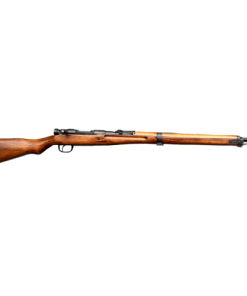
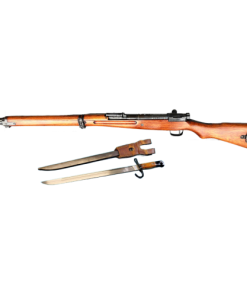
Japanese Arisaka Type 99 in 7.7 Dated 1939 Mum intact Rifle With Type 30 Bayonet (Original)
Reviews
There are no reviews yet.